

How Mezzanine Handrail Gates Improve Loading Safety
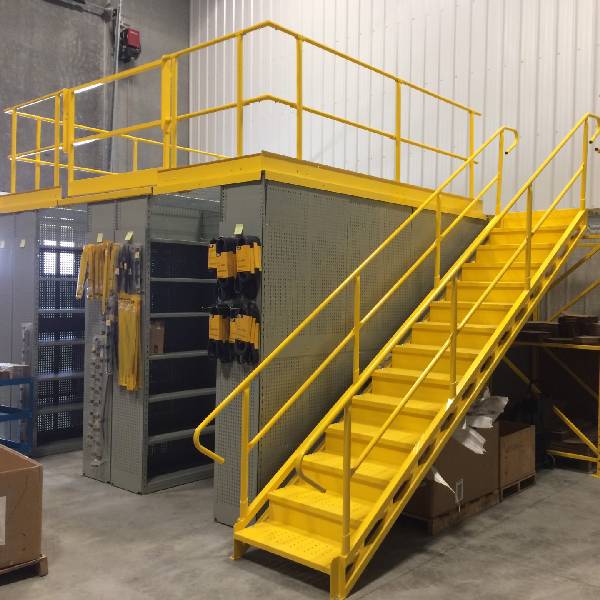
At Unitran Manufacturers, we work closely enough with warehouse and distribution operations to know that mezzanine loading points are where fall hazards become real problems. Open platform edges during active pallet transfers, forklift loading, and congested shift changes create conditions where a single misstep has serious consequences. Understanding how mezzanine handrail gates improve loading safety isn’t just about ticking a compliance box; it’s about removing the conditions that produce costly, preventable incidents.
The Specific Hazard at Mezzanine Loading Edges
Most fall incidents at mezzanine level happen during material movement, not during routine platform access. When workers are focused on a load, coordinating with equipment operators, or working under time pressure, open edges are easy to misjudge. The hazard is compounded by variable visibility around large pallet loads or equipment, by shift changes and high-traffic periods where multiple workers share a loading zone, and by temporary barriers like chains or removable posts that workers bypass rather than reset.
Chains and removable posts fail behaviourally. They depend entirely on consistent manual use. Gates address the hazard mechanically, regardless of how busy the floor gets.
Learn some more safety considerations for working on mezzanines.
How Properly Designed Gates Maintain Continuous Protection
A well-built mezzanine gate closes automatically after each use. That single design feature eliminates the gap where most incidents occur: the moment between when a barrier is removed and when it gets put back.
Gate Types for Loading Operations
The most common configurations for active loading areas include:
- Self-closing swing gates that return to the closed position via spring or gravity mechanism after each pass
- Dual-gate (passive) systems that require one gate to be closed before the other can open, keeping the platform edge protected throughout the transfer
- Pivot and sliding gates suited to tighter clearances or high-volume automated handling
For most warehouse loading applications, dual-gate systems offer the most consistent protection because they don’t rely on worker action to close. The mechanism enforces the sequence.
What Fails on Cheap Gates
Gate quality matters most at the components that take the most wear: hinges, closing springs, and latching hardware. In a facility running 20 or more gate cycles per shift, weak hinges deflect, springs lose tension, and latches stop catching cleanly. When a gate won’t close properly, workers prop it open or ignore it entirely, which defeats the purpose of having it installed. The total cost of a failed gate isn’t just the replacement; it’s the unprotected time in between.
Addressing the “Gates Slow Us Down” Concern
This objection comes up regularly, and it’s worth addressing directly: a gate that fits the operation correctly does not add meaningful time to a loading cycle. What slows operations are gates sized incorrectly for the load width or pallet dimension being handled, mechanisms that require two-handed operation when workers are carrying or guiding loads, and gates positioned in conflict with material flow paths.
Proper gate selection accounts for these factors. When the gate matches the workflow, workers pass through without breaking stride. When a fall incident does occur, the disruption (lost time, investigation, potential OSHA review, modified duty arrangements, etc.) far exceeds anything a well-placed gate would have cost in seconds per load.
Find out which mezzanine loading gate is right for your warehouse space.
Durability as a Practical Business Factor
A gate that holds up under daily industrial use is a fundamentally different product from one that passes a spec sheet. For warehouse environments, durability depends on frame construction with steel gauge and weld quality that resist deflection under repeated lateral contact, finish durability through powder coating or equivalent surface treatment that doesn’t degrade in dusty, high-humidity storage environments, and hinge and spring ratings matched to the actual cycle count your operation runs, not a theoretical low-use scenario.
Equipment buyers who’ve replaced cheap gates more than once already understand the math. Durable construction costs more upfront and far less over the service life of the installation.
Integration with Your Existing Mezzanine Setup
Gate selection doesn’t happen in isolation. The right gate for a given loading point depends on the platform edge configuration and available clearance, the load types and handling equipment in use, the frequency of access and number of workers using the gate per shift, and whether the mezzanine was designed with gate mounting provisions or requires retrofitting.
Retrofitting is common and workable, but it requires attention to how the gate anchors to the existing handrail or structural framing. A gate that’s inadequately anchored transfers the failure mode from the gate mechanism to the mounting point, which is a worse outcome.
Protecting Operations, Not Just Complying
The facilities that get the most out of mezzanine handrail gates are selecting gates that match their actual workflow, installing them correctly, and buying equipment built to survive the daily cycle count their operation demands. That’s the difference between a safeguard that works and one that looks right on an inspection checklist but fails in practice.
At Unitran Manufacturers, we help warehouse managers and operations teams find equipment that holds up where it matters. If you’re evaluating gate options for a mezzanine loading area or working through a safety upgrade for an existing platform, call us at 604-574-3465 and we’ll work through the specifics with you.


